

We all know how hectic student life can be.
When you’re studying for exams, attending lectures, and juggling a social life all at once, it may feel like there’s no time to eat! It’s equally easy to waste money on takeaways because you don’t have much cooking experience. Well, everyone has to start somewhere.
That’s why we’ve listed the recipes and instructions for several global dishes, from China to Italy, France to Greece. Keep your shopping list to hand and enjoy Luxury Student Homes’ top 7 lazy student recipes.

1. Jacket potatoes
Also known as ‘baked potatoes’ to the rest of the world, we Brits are famous for our classic jackets. But did you know the dish originated from South Peru? (they were thought to have been brought to Europe by Spanish explorers!)
Today, jacket potatoes are a staple British lunch. Easy to make and cheap to purchase, students can fill their jacket potatoes with anything their heart desires.
Be it the classic beans and cheese or tuna mayonnaise, you could even rustle up a salad to eat alongside!
Ingredients:
Jacket Potato:
- 1 large baking potato (like Maris Piper or King Edward)
- 1 tablespoon olive oil
- Pinch of salt
Filling Option 1: Beans and Cheese
- 1 tin of baked beans (approximately 400g)
- 50g grated cheddar cheese
Filling Option 2: Tuna Mayo
- 1 tin of tuna (in water, approx. 145g drained weight)
- 2 tablespoons mayonnaise
- Salt and pepper to taste
Method:
Preheat the oven to 200°C (180°C fan) or Gas Mark 6.
Prepare the potato:
- Scrub the potato clean and pat it dry.
- Prick the potato all over with a fork (to prevent it from bursting in the oven).
- Rub the potato with olive oil and sprinkle with a pinch of salt.
Bake the potato:
- Place the potato directly on the oven rack (or use a baking tray).
- Depending on the size of the potato, bake for 1 hour to 1 hour 15 minutes. The skin should be crispy, and the inside should be soft when pierced with a fork.
Prepare the fillings:
- Beans and cheese: Heat the baked beans in a saucepan over medium heat for about 5 minutes until hot, stirring occasionally.
- Tuna mayo: Drain the tin of tuna and mix it with the mayonnaise in a bowl. Add salt and pepper to taste.
Serve:
- Once the potato is cooked, remove it from the oven and cut a cross into the top.
- Squeeze the potato open and fluff up the insides with a fork.
- Add your chosen filling (either the hot baked beans topped with grated cheese or the tuna mayo mixture).
2. Feta and spinach wrap
A Greek-inspired dish that will tantalise your taste buds!
This feta and spinach wrap is something you can whip up when you need to grab and go: whether you’re in between lectures or having a light lunch, it’s another easy-to-make recipe that will be a staple part of your student menu.
Ingredients:
- 2 large flour tortillas
- 100g fresh spinach leaves
- 100g feta cheese, crumbled
- 1 tablespoon olive oil
- 1 clove garlic, minced (optional)
- Pinch of salt and pepper
- 1 tablespoon butter (optional for warming the tortillas)
Method
Prepare the spinach:
- Heat the olive oil in a frying pan over medium heat.
- Add the minced garlic (if using) and sauté for 1 minute until fragrant.
- Add the fresh spinach leaves and cook for 2–3 minutes until wilted.
- Season with a pinch of salt and pepper, then remove from the heat.
Assemble the wrap:
- Lay each tortilla flat and evenly divide the wilted spinach between them.
- Crumble the feta cheese over the spinach.
Wrap it up:
- Fold in the sides of each tortilla, then roll it up tightly into a wrap.
Warm the wraps (optional):
- If you’d like the wraps warm and lightly crispy, heat a non-stick frying pan over medium heat and melt 1 tablespoon of butter.
- Place each wrap in the pan and cook for 1–2 minutes on each side until golden and warmed through.
Serve:
- Slice the wrap in half and enjoy while warm!
3. Grilled cheese sandwich
An all-American classic, the grilled cheese sandwich is one of the quickest fixes on our list. It requires very few ingredients and can be put together quickly – perfect for students!
The modern grilled cheese is believed to have originated in 1920s America, but the original dish can be traced back even further. It is, without a doubt, one of the best comfort foods for when you’re craving something indulgent.
Ingredients
- 2 slices of white or wholemeal bread
- 50g cheddar cheese (or a mix of cheddar and mozzarella), grated
- 1 tablespoon butter (for spreading)
- Optional: 1 teaspoon mustard (for added flavour)
Method
Prepare the bread:
- Spread butter evenly on one side of each slice of bread. The buttered sides will be on the outside of the sandwich.
Assemble the sandwich:
- Place the grated cheese on the unbuttered side of one slice of bread. If you want an extra flavour kick, spread mustard on the unbuttered side before adding the cheese.
- Top with the second slice of bread, making sure the buttered side is facing outward.
Cook the sandwich:
- Heat a non-stick frying pan over medium heat.
- Place the sandwich in the pan and cook for 2–3 minutes on one side, pressing down gently with a spatula, until golden brown and crispy.
- Flip the sandwich and cook the other side for another 2–3 minutes until the cheese is melted and the bread is golden and crispy.
Serve:
- Remove the sandwich from the pan, cut it in half, and serve hot.
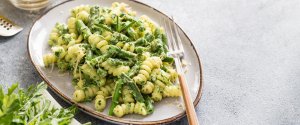
4. Pesto pasta
Now, we’re heading to Italy for pesto pasta (as prepared in your luxury student home!) Pesto dates back to the 16th century, meaning people have been enjoying this savoury combination for over 500 years.
You can make it purely with these two ingredients or add additional ingredients, such as protein or more vegetables.
Ingredients
- 200g dried pasta (such as penne, fusilli, or spaghetti)
- 2–3 tablespoons green pesto (jarred or homemade)
- 50g grated Parmesan cheese (optional for serving)
- 1 tablespoon olive oil
- Salt (for the pasta water)
Optional add-ins:
- 50g cherry tomatoes, halved
- 50g cooked chicken pieces or grilled vegetables
Method
Cook the pasta:
- Fill a large saucepan with water, add a generous pinch of salt, and bring it to a boil.
- Add the pasta and cook according to the packet instructions (usually 10–12 minutes) until al dente (firm to the bite).
Prepare the pesto:
- While the pasta is cooking, if you’re adding cherry tomatoes or cooked chicken, heat 1 tablespoon of olive oil in a frying pan over medium heat and cook the add-ins for 2–3 minutes until warmed through.
Mix the pasta and pesto:
- Once the pasta is cooked, drain it and return it to the saucepan.
- Stir in 2–3 tablespoons of pesto, ensuring the pasta is evenly coated. If you added chicken or tomatoes, mix them into the pasta at this point.
Serve:
- Dish the pesto pasta onto plates and sprinkle with grated Parmesan cheese (if using).
- Serve immediately.
5. Chickpea curry (Chana Masala)
Chana Masala is a traditional Northern Indian meal made with tomatoes, onions, spices, and, of course, chickpeas. It’s a delightfully full-bodied curry that literally translates to ‘spiced gravy’!
You can prepare it using pantry-friendly ingredients and pair it with white or brown rice.
Ingredients
- 1 tin (400g) chickpeas, drained and rinsed
- 1 tablespoon vegetable oil
- 1 onion, finely chopped
- 2 garlic cloves, minced
- 1 teaspoon fresh ginger, grated
- 1 tin (400g) chopped tomatoes
- 1 teaspoon ground cumin
- 1 teaspoon ground coriander
- 1 teaspoon garam masala
- 1/2 teaspoon turmeric
- 1/2 teaspoon chilli powder (optional, for heat)
- Salt to taste
- Fresh coriander (optional for garnish)
- Cooked basmati rice, naan, or chapati (for serving)
Method
Heat the oil:
- In a large frying pan or saucepan, heat 1 tablespoon of vegetable oil over medium heat.
Cook the onions:
- Add the chopped onion to the pan and sauté for 5–7 minutes until soft and golden.
Add the garlic and ginger:
- Stir in the minced garlic and grated ginger, cooking for another 1–2 minutes until fragrant.
Add the spices:
- Add the ground cumin, coriander, garam masala, turmeric, and chilli powder (if using). Stir and cook for 1–2 minutes to release the flavours of the spices.
Add the tomatoes and chickpeas:
- Pour in the tin of chopped tomatoes and stir in the drained chickpeas.
- Season with salt to taste.
Simmer the curry:
- Bring the mixture to a gentle boil, then reduce the heat to low and simmer uncovered for 10–15 minutes to allow the flavours to meld and the curry to thicken.
Serve:
- Garnish with fresh coriander (if using) and serve the chana masala with basmati rice, naan, or chapati.

6. Egg fried rice
Who doesn’t love egg-fried rice? One of the oldest traceable dishes on our list, it was reportedly created in the Sui Dynasty of China between 581 and 618 CE. Best of all, it’s suitable for even the most inexperienced student chefs.
Ingredients
- 200g cooked rice (preferably leftover or chilled, about 1 cup uncooked rice)
- 2 eggs
- 1 tablespoon vegetable oil
- 2 spring onions, finely chopped
- 1 clove garlic, minced (optional)
- 1 tablespoon soy sauce
- 1 teaspoon sesame oil (optional)
- Salt and pepper to taste
Optional add-ins
- 50g peas, carrots, or sweetcorn (frozen or cooked)
- Cooked chicken or prawns for extra protein
Method
Prepare the ingredients:
- If you’re using leftover rice, make sure it’s cold and separated to avoid clumping. If cooking fresh rice, allow it to cool completely.
- Beat the eggs in a small bowl and set aside.
Heat the oil:
- Heat 1 tablespoon of vegetable oil in a large frying pan or wok over medium heat.
Cook the eggs:
- Pour the beaten eggs into the pan and scramble them, stirring constantly, for 1–2 minutes until just cooked. Remove the eggs from the pan and set aside.
Stir-fry the vegetables and rice:
- In the same pan, add the minced garlic (if using) and cook for 30 seconds until fragrant.
- Add the spring onions (and any optional vegetables or cooked meat) and stir-fry for 1–2 minutes.
- Add the cold rice, breaking up any clumps, and stir-fry for 3–4 minutes until the rice is heated through.
Add the eggs and seasoning:
- Return the scrambled eggs to the pan.
- Stir in the soy sauce and sesame oil (if using). Season with salt and pepper to taste.
Serve:
- Mix everything well, and your egg-fried rice is ready to serve.
7. Ham and cheese croissant
A French-inspired lunch with a thoroughly British filling, the ham and cheese croissant is basically ready to eat: all you have to do is put it together!
These flaky pastries can be wrapped in tin foil and taken to campus. You can also prepare one before your lecture and reheat it in the air fryer when you’re ready.
Ingredients
- 2 large croissants (store-bought or homemade)
- 2 slices of ham
- 50g cheddar cheese (or Gruyère for a more traditional taste), sliced or grated
- 1 tablespoon butter (optional for spreading inside the croissant)
- 1 teaspoon Dijon mustard (optional for added flavour)
Method
Preheat the oven:
- Preheat your oven to 180°C (160°C fan) or Gas Mark 4.
Prepare the croissants:
- Slice each croissant in half horizontally, but not all the way through, so that they can be filled like a sandwich.
- If you prefer a richer taste, spread butter on the inside of the croissant.
- For extra flavour, you can spread a thin layer of Dijon mustard as well.
Assemble the filling:
- Place a slice of ham inside each croissant, followed by the cheese. Make sure the filling is evenly spread.
Bake the croissants:
- Place the filled croissants on a baking tray and bake in the preheated oven for 8–10 minutes, or until the cheese is melted, and the croissants are golden and slightly crispy.
Serve:
- Remove the croissants from the oven and serve them warm, with the cheese melted and gooey.
We have properties in Liverpool’s best student areas!
We hope you enjoyed our top lazy student recipes: they’re designed for novice chefs, so you don’t have to worry about complicated cooking. You could even make these recipes with your housemates inside your new student property in Liverpool.
If you have yet to book a place, you can become one of our tenants by checking out our quality student houses! We offer accommodation in Liverpool’s best student areas, like the City Centre and Wavertree.